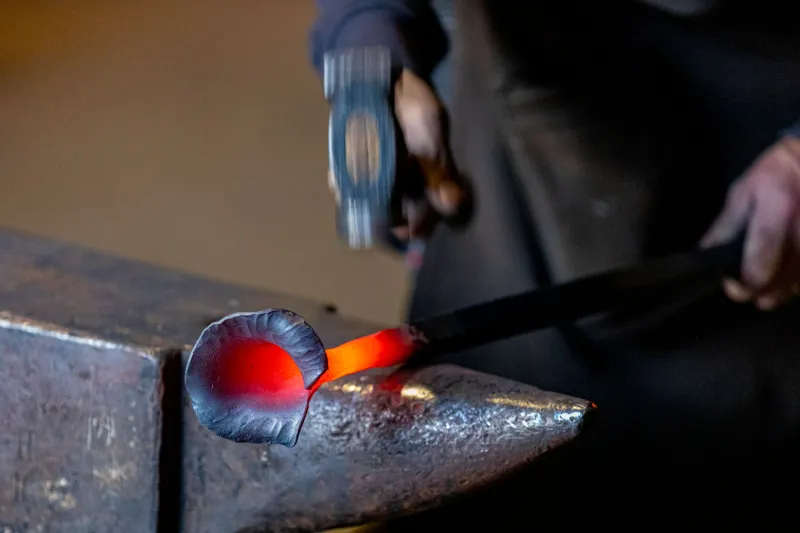
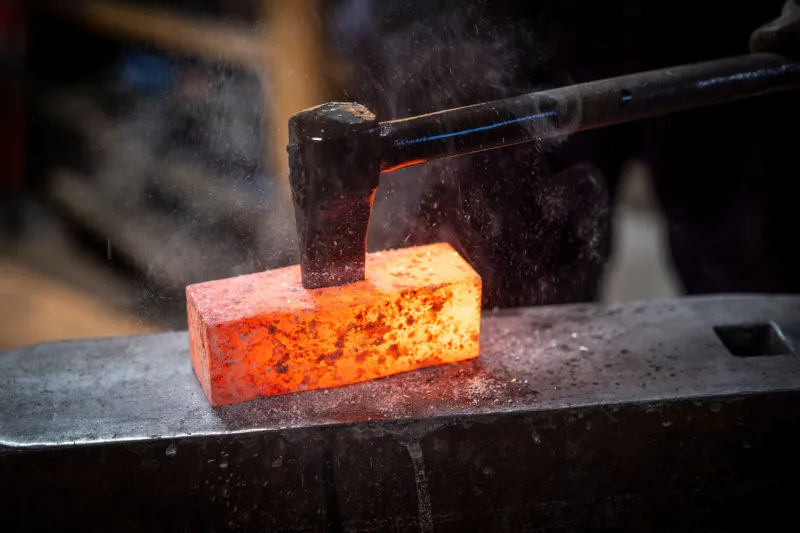
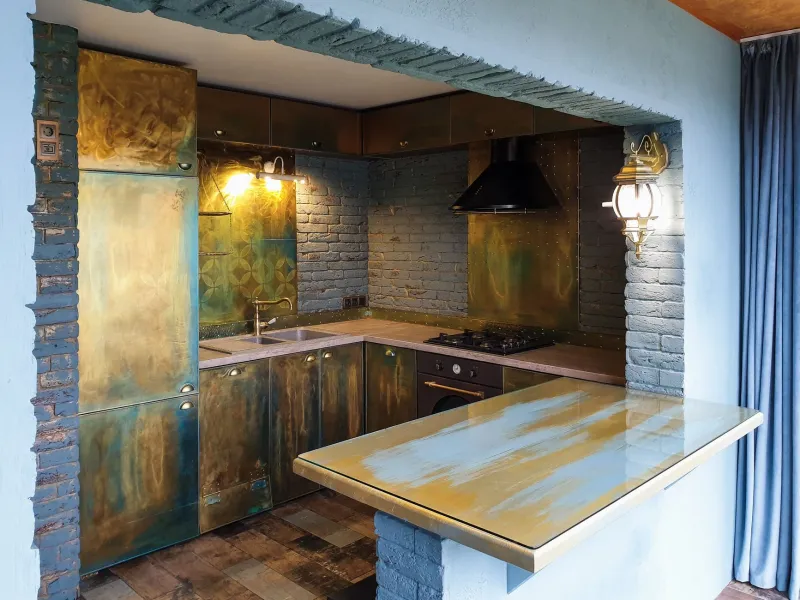
The Gallery Has a Forge: How American Metalwork Became the Collectible Everyone Wants
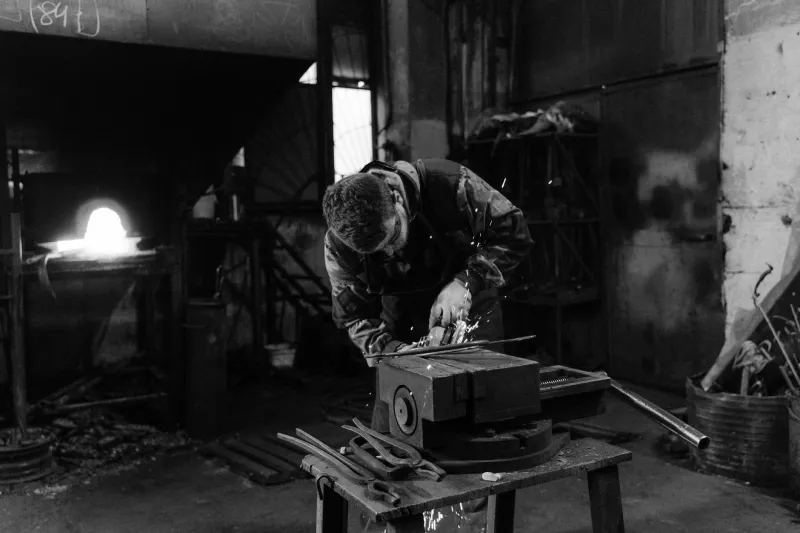
Walk into a high-end design show in Austin or Brooklyn these days and you'll notice something odd: the booths drawing the biggest crowds aren't always the painters or the ceramicists. More often than not, it's the person with scorched forearms standing next to a forged steel piece that looks like it was pulled straight out of a lava flow.
Metalwork is having a moment. Not the mass-produced "farmhouse chic" moment of the 2010s — that was decoration. This is different. Collectors are starting to treat handcrafted metal sculpture the way the art world treats limited-run prints: something with a maker, a story, a number on it, and a price that goes up.
From Furnishing to Fine Art
For decades, forged metal in the home lived in a strange middle zone. A hand-wrought iron chandelier was "nice." A bronze fireplace screen was "tasteful." But nobody asked who made it, and nobody expected it to be worth more in ten years.
That's changing, and the reasons are pretty straightforward. Buyers got burned by fast furniture that didn't last a decade. Interior designers got tired of specifying the same catalog pieces for every client. And a wave of younger American smiths — trained in places like the American College of the Building Arts in Charleston or through old-school apprenticeships in the Appalachian and Pacific Northwest traditions — started making work that reads as sculpture first and furnishing second.
The result is a market where a one-of-one forged steel piece can command four figures, sometimes five, and where the maker's name actually matters.
Why Metal, Why Now
There's a practical logic underneath the trend. Paintings need climate control and good lighting. Fabric fades. Wood warps in humid summers — ask anyone in the Gulf South. Forged steel, bronze, and copper just sit there, getting better-looking as they age. A bronze piece that develops a soft patina over fifteen years isn't deteriorating; it's maturing.
There's also the rarity factor. A painter can edition a lithograph in runs of 200. A smith who spends 60 hours hammering, forging, and finishing a single piece simply cannot scale. Every piece is, by definition, scarce. Collectors have figured this out.
And unlike a lot of "investable" design categories, the entry point is reasonable. You're not bidding at Sotheby's. You're emailing a workshop in Asheville or Santa Fe or Portland and starting a conversation.
How to Spot a Maker Worth Collecting
Not every smith is a future collectible, and that's fine — buy what you love first. But if you're thinking about the long game, here's what experienced collectors and design pros look for:
- A body of work, not a single viral piece. Consistency of voice across years matters more than one striking Instagram post.
- Technical chops you can see. Clean joinery, thoughtful finishes, and joinery that's honest — forged where it should be forged, not hidden behind welds everywhere.
- A recognizable language. If you could pick the maker's work out of a lineup, that's a good sign.
- Institutional or design-world nods. A piece in a hotel lobby, a museum shop, a juried craft show like the Smithsonian Craft Show — these are signals.
- Scarcity by nature, not by marketing. If the maker claims to "hand-forge" 500 identical pieces a year, do the math.
Documentation: What to Ask For
Here's where the art world comparison gets real. If you're buying a piece as a collectible — or just want to protect its value for the day your kids inherit it — treat it like art from day one.
Ask for a certificate of authenticity with the maker's name, the piece's title, the year, the materials, and the dimensions. For limited editions, insist on the edition number (like 3 of 12) stated in writing. Get a copy of the invoice. And photograph the piece on delivery.
Some smiths offer what's called a maker's mark — a stamped signature or monogram worked into the piece itself, the way a jeweler stamps a hallmark. That's gold. A stamped signature in steel is about as unforgeable as provenance gets.
If the maker offers a care guide, take it. Future buyers will want to know the piece was maintained properly, and honestly, so will you.
The Designer Effect
Interior designers deserve a chunk of the credit for this shift. When a designer specifies a commissioned forged piece for a client's great room, they're doing more than solving a design problem — they're introducing hundreds of guests to the idea that metalwork can be the centerpiece of a room, not the accessory.
Designers have also become matchmakers between collectors and smiths. It's increasingly common for a designer to place a client's commission with an up-and-coming artisan and quietly follow that maker's career. When the maker's prices climb — and they often do — the client's piece climbs with them.
Start Small, But Start
You don't need to commission a ten-foot sculpture to enter this world. A forged bottle opener, a set of fireplace tools, a small wall piece — these are the gateway works, and they carry the same maker's mark and documentation as the big commissions.
The truth is, most people who buy artisan metalwork don't buy it to flip it. They buy it because a machine can't make it, because it'll outlive the sofa it sits near, and because somewhere in a workshop in America, a person shaped it by hand.
But if it happens to appreciate? Well. That's just the forge paying you back.