When the Kitchen Gets Forged: 7 Rooms Where Custom Metal Runs the Show
We spend a lot of time talking about metalwork in living rooms and entryways, but let's be honest about where the action is: the kitchen. It's the most-used room in the American home, it's where guests gravitate during every party, and it's the room where a single well-made metal piece can absolutely steal the show.
We've pulled together seven kitchen setups — composites of real projects and design directions we love — where the metalwork isn't supporting the room. It is the room. And for each one, we'll get into the why: the material, the finish, and the logic that makes it work.
1. The Hammered Copper Hood Over a Humble Range
The move: a custom copper range hood with hand-planished texture, hung over a straightforward stainless range in a white shaker kitchen.
Why it works: contrast. The hood is the only warm, imperfect element in a clean, cool room, so the eye goes straight to it. The finish strategy matters too — this one was left unlacquered, so it's slowly deepening toward a rich russet. The kitchen gets better every year without anyone lifting a finger.
2. The Blackened Steel Pot Rack That Doubles as Architecture
The move: a suspended steel pot rack spanning a kitchen island, with integrated downlight mounts and hand-forged hooks.
Why it works: it solves three problems at once — storage, lighting, and a visual anchor above the island, which is often dead space. The blackened finish disappears against the ceiling line, so the hanging copper and cast iron read like sculpture. Rule of thumb: when the metalwork holds other objects, keep the frame quiet and let the contents provide the color.
3. Wrought Iron Shelving Against Exposed Brick
The move: hand-forged open shelving with riveted strap brackets, mounted on an exposed brick wall in a converted loft.
Why it works: material honesty. Iron on brick is a pairing with real historical roots in American industrial buildings, so nothing feels themed or pasted-on. The brackets were sized generously — undersized shelf hardware is the most common mistake we see — and the black wax finish splits the difference between the brick's reds and the room's steel-gray window frames.
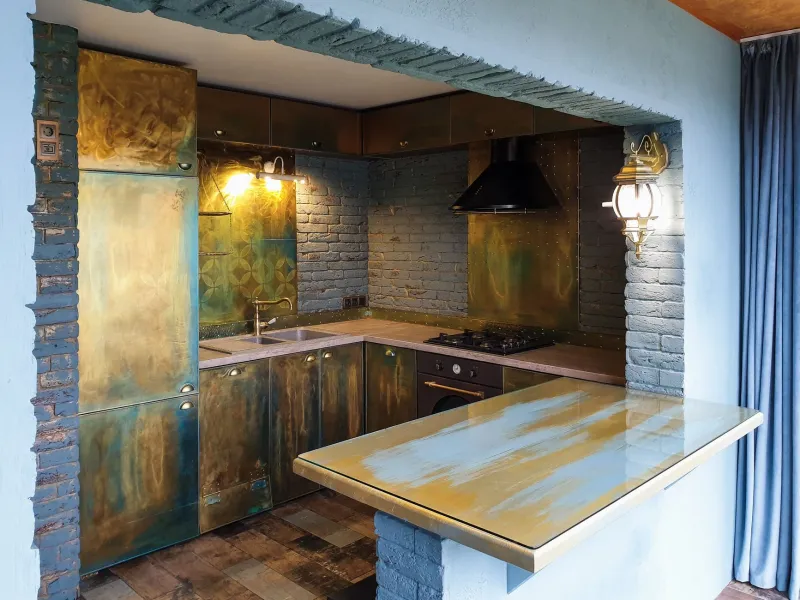
4. The Brass Backsplash That Behaves Like Jewelry
The move: a satin-finished brass backsplash panel behind the cooktop, with a lightly hammered surface that catches light unevenly.
Why it works: it's the one reflective surface in a matte kitchen — flat-panel oak cabinets, honed stone counters, no glossy tile anywhere. Because brass is the sole shine source, it doesn't compete with anything. The satin (not mirror) finish is the whole trick; polished brass in a kitchen becomes a fingerprint smudge gallery within a week.
5. The Industrial Rail System in a Farmhouse Kitchen
The move: a ceiling-mounted steel rail and trolley system, originally designed for hanging plants, repurposed for hanging cast iron skillets and drying herbs over a prep zone.
Why it works: personality. Every piece so far has been about visual logic — this one is about making the kitchen feel like it belongs to someone. The raw, slightly scaly mill finish on the steel was intentional; it reads utilitarian in the best way against painted cabinetry.
6. The Zinc Island Top With a Forged Base
The move: a poured-look zinc countertop on a hand-welded steel base with visible, cleanly ground welds.
Why it works: zinc is the great diplomat of kitchen metals. It pairs with marble, butcher block, stainless, and painted wood without favoring any of them. The forged base keeps the island from feeling like a slab on a box — the open frame lets the floor run through, which visually lightens a very large island.
7. The Statement Stair Rail You See From the Sink
The move: a sculptural forged railing on the staircase that opens directly into the kitchen — visible from the sink, the range, and the island.
Why it works: sightlines. In open-plan homes, the kitchen stares at whatever's across the room all day. Making that something handcrafted — a rail with a sweeping scroll motif that echoes the cabinet hardware — ties two rooms into one composition. It's the argument for thinking about metalwork as a whole-house project, not a room-by-room one.
The Common Thread
Notice what all seven have in common: each kitchen commits to one hero metal element and lets the rest of the metal details support it. No room is competing with itself. That's the real secret — not copper versus steel, not iron versus brass, but restraint. Pick your moment, forge it well, and let it carry the room.