The Question Every Good Room Should Be Able to Answer
Here's a party trick worth trying at the next house gathering you attend: walk up to any piece of decor and ask the host where it came from.
Nine times out of ten, you'll get a shrug, or a vague gesture toward a big-box website, or "I think it was a wedding registry thing?" But every so often — and it's happening more often — you'll get a story. A metalworker in Asheville made that. We visited the shop. She showed us the hammer she uses for the edges.
That second answer is where American interiors are heading, and honestly, it's about time.
We Spent Two Decades Buying Anonymous Stuff
Let's be honest about the last twenty years of home decor. The rise of the mega-retailer gave everyone access to good-looking rooms at reachable prices, and nobody should apologize for furnishing a first apartment on a budget. But something got lost along the way: the connection between objects and the people who made them.
An entire generation of homes filled up with things nobody could name the origin of. Identical console tables in living rooms from Seattle to Tampa. And when everything is anonymous, nothing is precious. That's why the same console that was "fine" in March gets curbed in September when the catalog refreshes.
Provenance Is the New Thread Count
The shift I'm seeing — in our commission inquiries, in what interior designers ask for, in what homeowners bring up during studio visits — is that people increasingly care about the answer to "who made this?" as much as the object itself.
It mirrors what happened with food. Twenty years ago, nobody asked about the farm their tomato came from. Now it's on the menu. Wine had this moment decades ago. Coffee, cheese, furniture — the pattern is consistent. Once Americans taste the difference that a named maker makes, mass-produced versions start to feel like they're missing something. Because they are.
A commissioned piece carries something a catalog item structurally cannot: a specific set of hands, a specific week in a specific shop, a conversation that shaped the final form. When a client asks us to bend a stair rail to echo the curve of their grandmother's garden gate, that rail now holds a story no factory could replicate at any price.
How to Actually Vet a Maker
Of course, the maker movement has its share of marketing dressed up as craft. If provenance is going to matter, it needs to be real. A few things we'd tell any homeowner or designer to look for:
Ask about process, not just product. A genuine artisan can talk for ten uninterrupted minutes about how they'd build your piece — the joinery, the finish, the tricky bend. Vague answers about "handcrafted quality" with no specifics deserve skepticism.
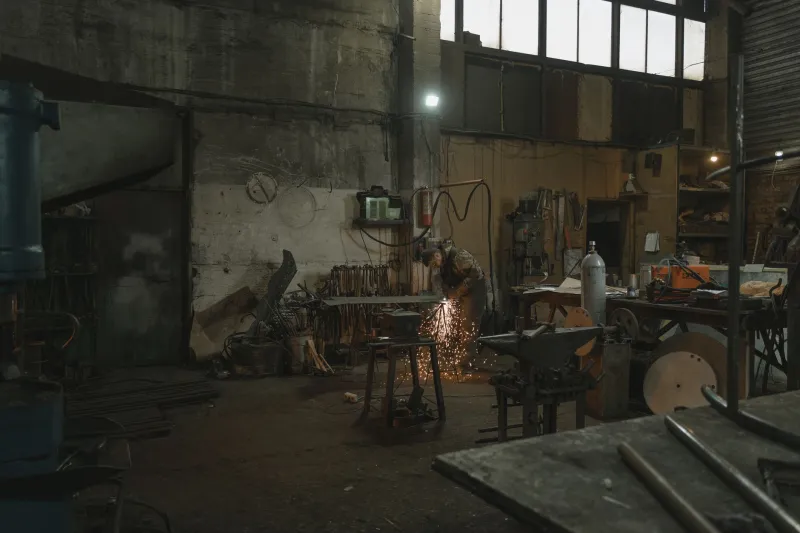
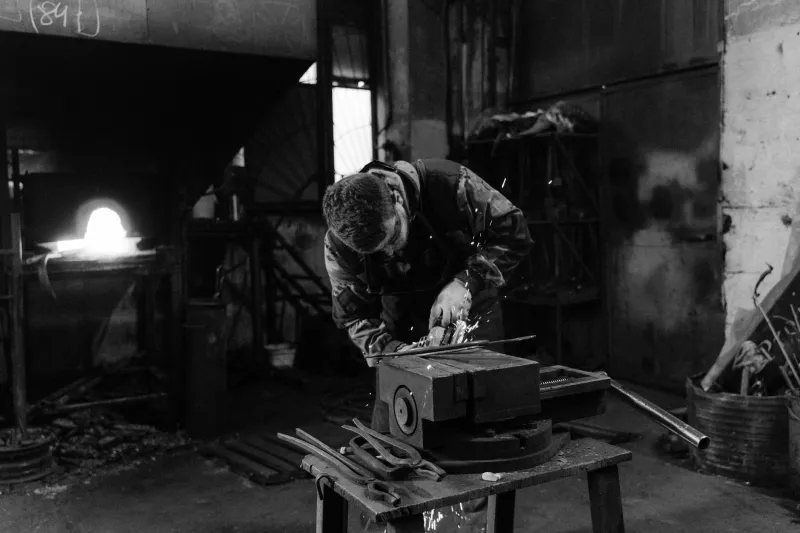
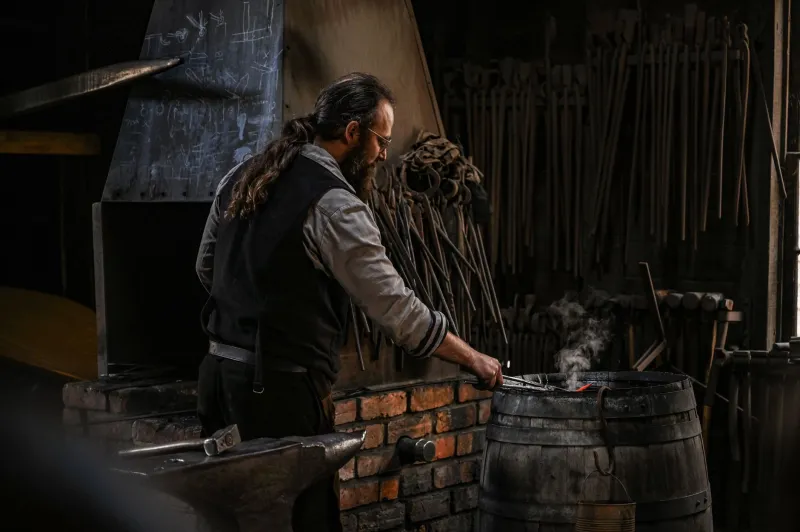
Look for a real shop. Photos of the actual workspace, actual work in progress, actual people. Every serious metal shop I know is proud to show the mess.
Expect a conversation about timeline. Slow-made means slow. If someone promises a bespoke hand-forged piece in a week, ask what that word "bespoke" is doing in the sentence.
Ask who else they've worked with. Designers, local businesses, repeat clients. Craftsmanship leaves a trail.
What a Name on a Piece Is Actually Worth
I'll make the argument plainly: in ten years, the most envied objects in American homes won't be the most expensive ones. They'll be the ones with an answer.
A table by a fabricator in Ohio. A light fixture forged by a woman who runs her own shop in Santa Fe. A weathervane made to look like a dog that meant everything to this family.
That's narrative mass no algorithmic storefront can manufacture. And it's durable in a way trends aren't — you don't replace a piece with a story. You repair it, you refinish it, you argue over who inherits it.
Start Small, Start Local
You don't need to commission a staircase to join this shift. A set of hooks by a local smith. A fire screen made by someone whose shop you can drive to. Even one piece with a real answer changes how you relate to a room — it raises the bar for everything around it.
And if you're ever near a working forge, knock. Most of us will drop the tongs, show you around, and talk metal until your coffee's cold. That conversation, as much as the object that comes after it, is the whole point.