Every Hammer Blow Leaves a Story: Old-School Smithing in the Modern American Home
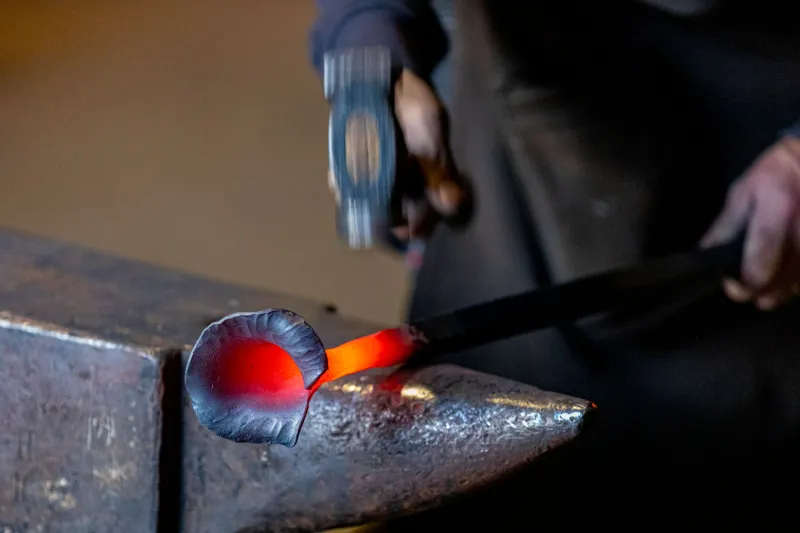
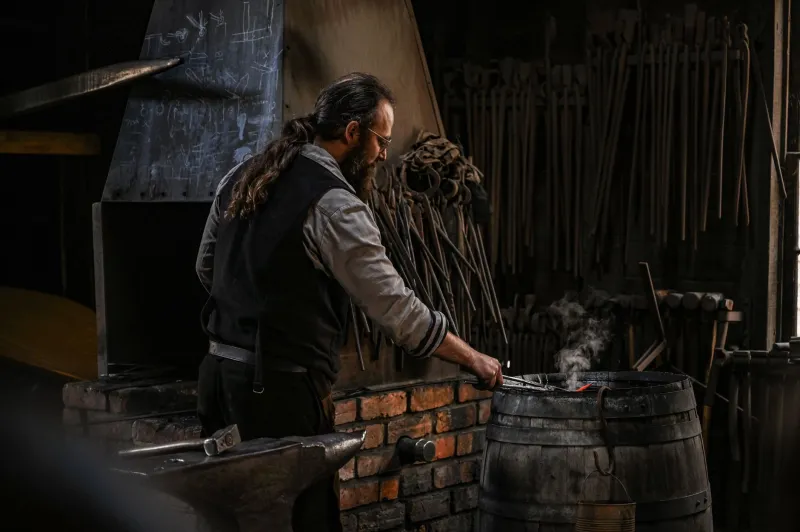
Walk through any historic American town — Williamsburg, Sturbridge, a preserved main street in Pennsylvania — and chances are the blacksmith shop is the stop everyone lingers in. There's something magnetic about watching a piece of rigid steel bend like clay under a hammer. What most visitors don't realize is that the techniques on display in those living-history demos aren't museum relics. They're the same ones shaping the custom fire screens, railings, and light fixtures going into homes across the country right now.
The Oldest Trick in the Book: Joinery Without Glue or Screws
Modern furniture is held together by hardware — brackets, cam locks, Allen bolts. Traditional metalwork relies on something older: joinery. A smith might forge one bar so it wraps around another, punch and drift a hole for a tenon to pass through, or rivet two pieces flat while they're still glowing hot.
The result is a joint that's often stronger than the metal around it. There's nothing to loosen, nothing to strip, nothing to rust apart at a seam. When you commission a forged gate or a bed frame built this way, you're getting a structure engineered the way cathedrals and covered bridges were — designed to be tightened, repaired, and handed down rather than replaced.
It's also invisible craftsmanship. A mortise-and-tenon joint in steel looks like magic if you don't know what you're seeing: two pieces of metal that simply... become one.
Why Hammer Marks Are a Feature, Not a Flaw
Here's the biggest difference between forged and factory-made metal: texture.
Mass-produced decor is rolled, cast, or stamped — surfaces come out smooth, uniform, and honestly, a little dead. Hand-forged steel is different. Every pass of the hammer leaves a subtle facet, a slight ripple in the surface that catches light differently depending on where you're standing.
Under a good oil-rubbed or waxed finish, those marks read as depth. Under paint, they'd disappear — which is why forge-made pieces are usually finished to show the metal, not hide it.
Think of it like the difference between a printed reproduction of a painting and the painting itself. Up close, one is flat ink; the other has brushstrokes. A forged fireplace screen or set of cabinet pulls has those brushstrokes. Nobody else's piece will have the exact same pattern of marks, because no two smiths strike a hammer the same way — and no single smith strikes it the same way twice.
The Anvil Doesn't Lie
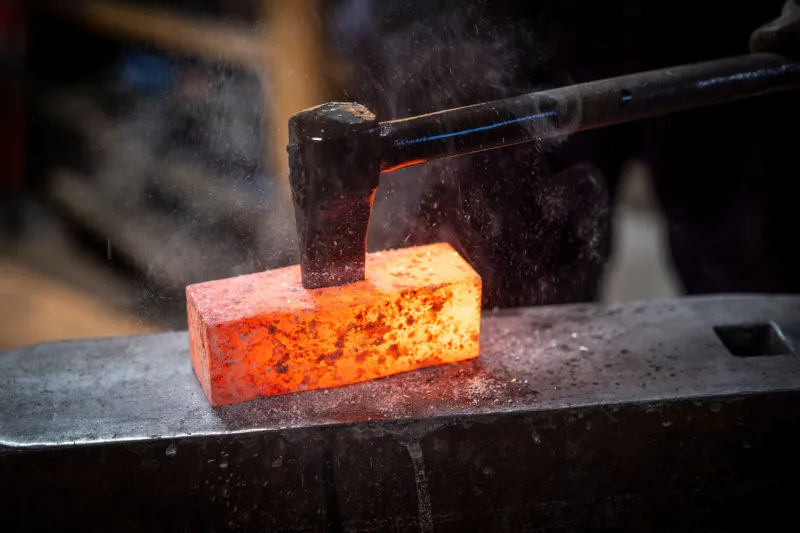
There's a reason "striking while the iron's hot" became a proverb. Forging is a race against the clock: steel is workable only within a narrow temperature window, glowing somewhere between cherry red and bright orange. Miss the window and you're reheating. Rush it and you'll crack the metal.
What does this mean for the finished piece in your home? It means every curve, scroll, and taper was decided in real time by a person holding a hammer — not programmed into a machine. The gentle sweep of a handrail, the taper at the end of a curtain rod, the way a candle cup flares: these are thousands of small judgment calls made at 2,000 degrees.
That's also why forged pieces feel different in the hand. Hand-drawn tapers — where the smith gradually narrows a bar from thick to thin — have a fluidity that laser-cut stock can't fake. Interior designers notice it immediately. So do guests, even if they can't articulate why.
Built to Become an Heirloom
There's a practical upside to all this tradition: longevity. Properly forged and finished ironwork can last generations with nothing more than an occasional re-wax. We're not being poetic — colonial-era hinges and hearth tools are still functional three centuries later.
Compare that to the typical lifespan of imported big-box decor, and the math gets interesting. A hand-forged piece costs more up front, sure. But spread across the decades — or the generations — it owns that cost. And unlike a factory piece, it can be repaired. A smith can re-forge a bent scroll, re-weld a broken weldment, refresh a finish. Try doing that with a stamped steel anything.
Your Home's Story, Written in Steel
Here's the part we love most about this work: every commissioned piece carries a record of its making. The hammer marks, the forge-welded seams, the slightly asymmetric scroll — they're a kind of signature. Fifty years from now, when someone runs a hand along the railing in your stairway, they'll be touching the exact strikes a smith laid down on an anvil in an American shop.
That's not mass production. That's provenance. And it's the reason the old forge still has so much to teach the modern home.