Where the Crowd Gathers: Commissioning a Fire Feature That Anchors the Whole Backyard
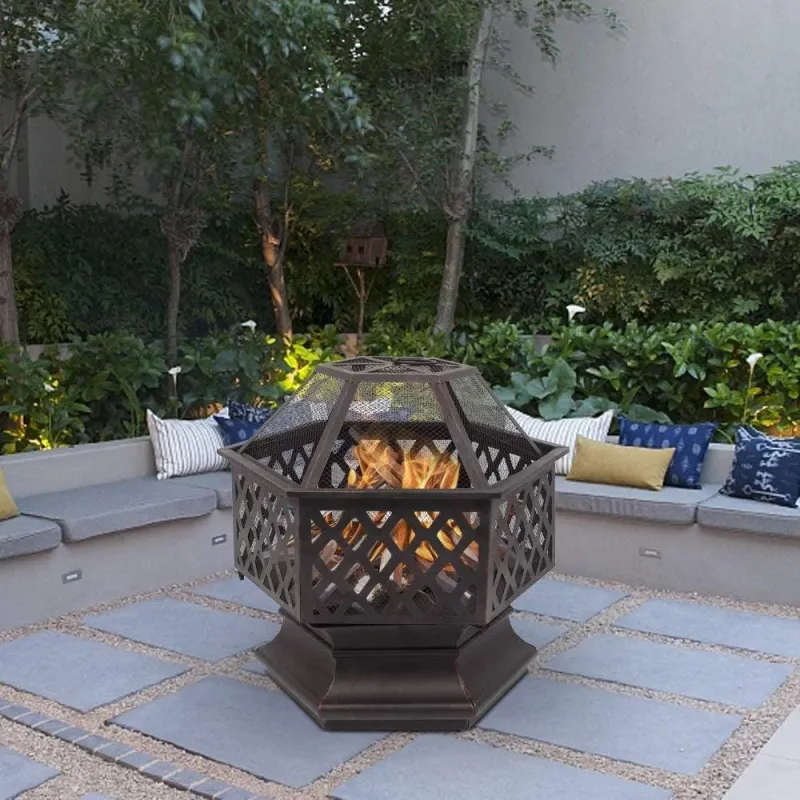
Photo: custom steel fire pit backyard patio evening flame, via www.hbuildingmaterials.com
There's a reason every party ends up at the fire. You can have the perfect patio furniture, a stocked outdoor kitchen, string lights overhead — but the moment the flame catches, everyone migrates. The fire is gravity. And if you're going to commission one piece of custom metalwork for your backyard, this is the piece that pays off the most.
We've built enough fire features over the years to know the pattern: homeowners come in wanting "something for the patio," and by the end of the design conversation they realize what they actually want is a gathering point. That reframing changes everything about how the piece gets designed.
Heat Changes the Rules
The first thing any honest fabricator will tell you: fire features are not decorative metalwork with a flame stuck in them. Steel near a fire does things. It warps, it oxidizes faster, thin sections fail. So material choice isn't an aesthetic footnote — it's the whole engineering brief.
Corten (weathering steel) is the workhorse here. It's what most sculptural fire pits you've seen in magazines are made from. The rusted patina isn't a flaw; it's a protective layer that regenerates. A quarter-inch corten fire pit will outlive the mortgage on most American homes.
Mild steel, thick-gauge works beautifully too, especially for cut screens and surrounds set back from direct flame. The trick is thickness — anything under 3/16 inch tends to bow over a season or two of hot burns.
Stainless shows up for gas fire features, where the cleaner look matters and the heat is more controlled. It costs more, but for a sleek, modern patio in, say, Scottsdale or Miami, it's often the right call.
For wood-burning features, we always advise clients to think about drainage and airflow as much as aesthetics. A fire pit that holds rainwater is a fire pit that rusts from the inside out.
The Cut Screen: Metalwork's Best Party Trick
If fire pits are the anchor, custom plasma-cut screens are the conversation starters. These are steel panels — freestanding or mounted — with a silhouette cut through them, and the flame behind turns the whole thing into a lantern.
The motifs clients request say a lot about where they live. We've cut:
- Mountain ridgelines for a cabin outside Denver
- Live oaks and Spanish moss for a Lowcountry backyard
- A leaping trout for a fly-fisherman in Montana
- Abstract geometric patterns for a mid-century house in Palm Springs
- A family's last initial, oversized, for a ranch gate in Texas
The best designs are cut with the flame in mind. Openings too small and the fire can't breathe; too large and the silhouette disappears. A good fabricator tunes the pattern so the light throws through it — that's the difference between a screen and a sculpture.
Gas or Wood? The Question That Shapes Everything
Wood-burning wins on atmosphere: the crackle, the smoke smell, the ritual. But it comes with real considerations — smoke drift toward the neighbors' windows, spark screens in many municipalities, and ash cleanup.
Gas burners are cleaner, light with a switch, and often allowed where wood isn't. They also open up design possibilities — linear troughs set into a steel table, for instance, or a low rectangular feature that doubles as a coffee table when it's off.
There's no wrong answer, but decide before the design starts. Retrofitting a burner into a wood-burner's shape rarely works well.
What a Real Commission Timeline Looks Like
Let's demystify this, because it's the question everyone asks last and should ask first.
A straightforward fire pit — a shape we've built variations of, sized to your patio — typically runs four to six weeks from deposit to delivery. Design is quick because the engineering is already solved.
A fully custom sculptural piece or a multi-panel screen with an original silhouette usually lands at eight to twelve weeks. That includes design drawings, a revision round or two, cutting, welding, finishing, and — importantly — a test burn before it ever leaves the shop.
Fireplace surrounds for indoor or covered outdoor hearths vary more, since they often need to coordinate with masons and contractors. Build in buffer time if you're tying it to a larger renovation.
One honest note: fall is peak season for fire features. If you want yours ready for the first cool evening of October, start the conversation in early summer.
Design It for the People Around It
The last piece of advice is the least technical. Think about the three feet around the fire, not just the fire itself. How many people need a seat with a view of the flame? Does the pit height work for conversation, or will everyone be craning down? Is there a ledge wide enough to rest a drink?
The best fire features we've built weren't the most elaborate ones. They were the ones designed around a specific scene: six friends, two dogs, a cooler of local beer, and somewhere to put your feet. Get that picture clear, and the metalwork follows.