The Fixture Is the Focal Point: Commissioning Metal Lighting That Earns the Ceiling
Walk into almost any well-decorated American home and you'll spot the pattern immediately: gorgeous furniture, thoughtful art, and then a light fixture that came in a box from a big-box store, sitting up there like an afterthought. The ceiling is the largest uninterrupted canvas in most rooms, and it's the one we almost always leave blank.
Custom metal lighting changes that equation. A hand-forged chandelier or a pair of hammered sconces doesn't just illuminate a room — it anchors it. And unlike a painting, you can't shove it to another wall when you get tired of it. So it's worth understanding what goes into a piece that earns its overhead real estate.
First, Accept That a Fixture Is Furniture
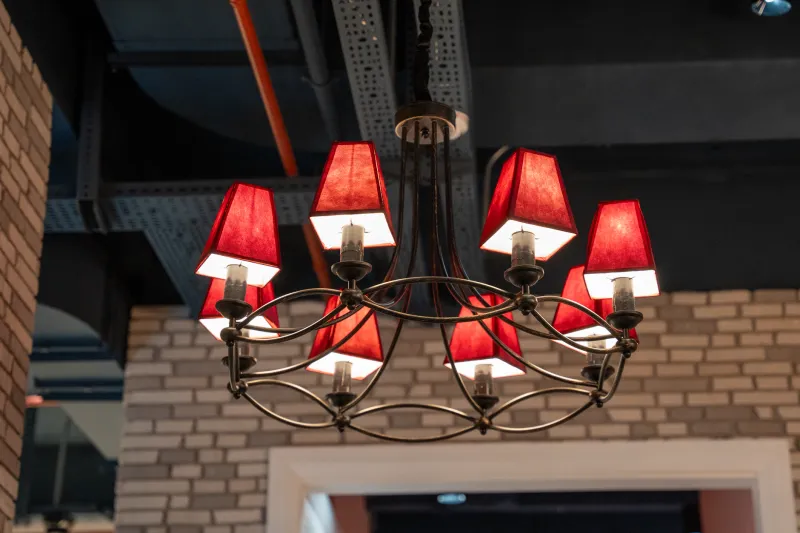
The biggest mindset shift for homeowners is treating lighting like the sculptural object it is. A six-arm iron chandelier over a dining table isn't "lighting" in the way a recessed can is lighting. It's the room's centerpiece — the thing your eye lands on before the table, the chairs, or the view out the window.
That means the same questions you'd ask about any commissioned piece apply: What's the style of the room? What's the visual weight it needs to carry? Should it whisper or announce? A slender blackened-steel pendant trio might suit a modern loft in Chicago, while a hand-riveted copper fixture feels right at home in a Craftsman bungalow in Portland.
The Invisible Engineering: Weight, Wiring, and Balance
Here's what nobody sees when they admire a finished piece: the math.
Metal is heavy. Wrought iron, bronze, even substantial-gauge steel add up fast across an eight-arm fixture. An artisan has to design so the weight distributes properly across the mounting point, often engineering internal armatures that carry the load while the decorative elements stay visually light. A chandelier that sags even slightly to one side reads as broken, not rustic.
Then there's the wiring. Every arm, every candle-style socket, every joint is a channel for wire that has to be hidden, insulated, and accessible for future bulb changes. Good artisans route wiring through the structure itself — down a hollow arm, through a forged stem — so you never see it. UL-listed components and junction boxes rated for the fixture's weight aren't optional; they're the difference between a heirloom and a hazard.
Balance is the third leg. A fixture with asymmetric arms — a popular look right now — has to be counterweighted so it hangs true. This is the kind of problem-solving that separates a forge-made piece from something stamped out by the thousands.
Finish Is a Design Decision, Not an Afterthought
The same chandelier in raw steel, oil-rubbed bronze, or a clear-coated rust patina reads as three completely different objects. Finishes interact with light in ways paint never will — hammered surfaces catch and scatter it, brushed finishes soften it.
A few things worth knowing before you commission:
- Heat matters. Finishes near sockets need to handle bulb warmth. Your artisan will spec high-temperature coatings where it counts.
- Dimmers change everything. A patinated copper sconce at full brightness and at 30% are two different moods. Plan your dimmer early.
- Patina is alive. If you choose a living finish, know that it will continue to evolve — which is a feature, not a flaw, if you go in with open eyes.
Sizing It: The Numbers That Save You Regret
Nothing kills a commission faster than a fixture that's the wrong scale. A few rules of thumb that interior designers lean on:
Dining tables: The fixture's diameter should run roughly one-half to two-thirds the table's width, hung 30 to 36 inches above the tabletop.
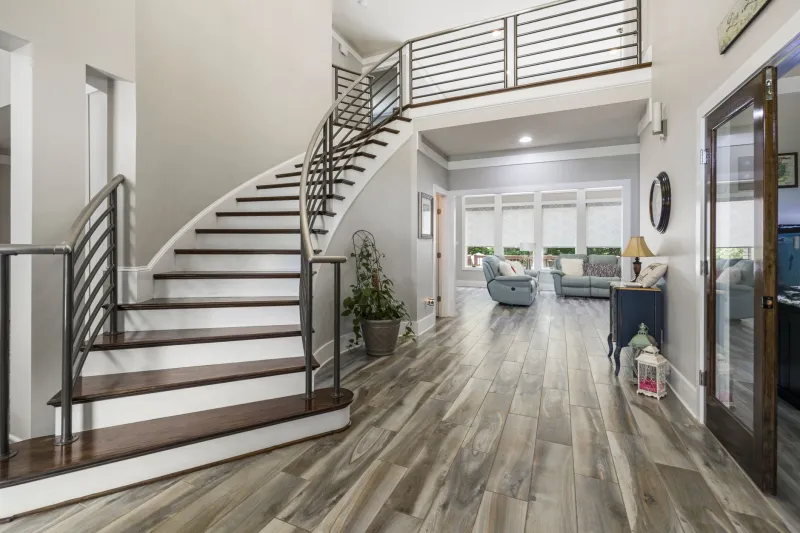
Entryways and two-story foyers: Add 2 to 3 inches of fixture height for every foot of ceiling height. A 12-foot foyer can handle — and honestly needs — something substantial.
Living rooms: If the fixture is purely sculptural, err larger than feels safe. Almost every homeowner who commissions metal lighting says the same thing afterward: "I should have gone bigger."
Your fabricator should ask for room dimensions, ceiling height, and photos before quoting anything. If they don't, that's a red flag.
How to Actually Start the Conversation
Commissioning is simpler than most people expect. Gather photos of your room, a rough sense of your style (Pinterest boards are fine — artisans have seen worse), your budget range, and your timeline. Expect the process to run six to twelve weeks for a one-of-a-kind piece: design sketches, material selection, fabrication, finishing, and wiring certification.
The best collaborations happen when you bring the room and the artisan brings the ideas. You might arrive asking for a chandelier and leave with a better concept — a pair of oversized sconces flanking the fireplace, or a linear fixture that echoes the beams overhead.
The ceiling has been waiting. Give it something worth looking up for.