What's Actually Inside That Quote? A Fire Screen, Itemized
Ask five metal shops what a custom fire screen costs and you'll get five answers, probably all some version of "depends on the design." It's true. It's also completely unhelpful when you're trying to figure out whether you can afford the thing.
So let's do what shops rarely do: put an actual number on paper and dissect it. The piece below is fictional, but the numbers are modeled on real shop rates from small American fabrication studios. Your local smith's numbers will vary. The proportions won't.
The Piece
A flat fire screen for a standard wood-burning fireplace, roughly 44 inches wide by 32 inches tall. Three panels with a gentle arc, a hand-forged leaf-and-vine motif across the top rail, mesh backing, flat black finish with wax topcoat.
Total quote: $2,850.
Here's where it goes.
Materials: About $340
Mild steel bar and flat stock, expanded metal mesh, hinges, weld consumables, and finishing supplies — wax, solvent, abrasives. Roughly 12% of the total. Surprised? Most first-time commission clients are. The steel is the cheap part.
Design Time: About $250
Before a single bar gets heated, someone sketches, revises, and engineers the thing. On a piece like this, that's four to six hours of drawing, a couple of email exchanges, and figuring out how the leaf motif will actually translate into three dimensions. Some shops fold this into the total; ethical ones itemize it or state it's included.
Shop Hours: About $1,980
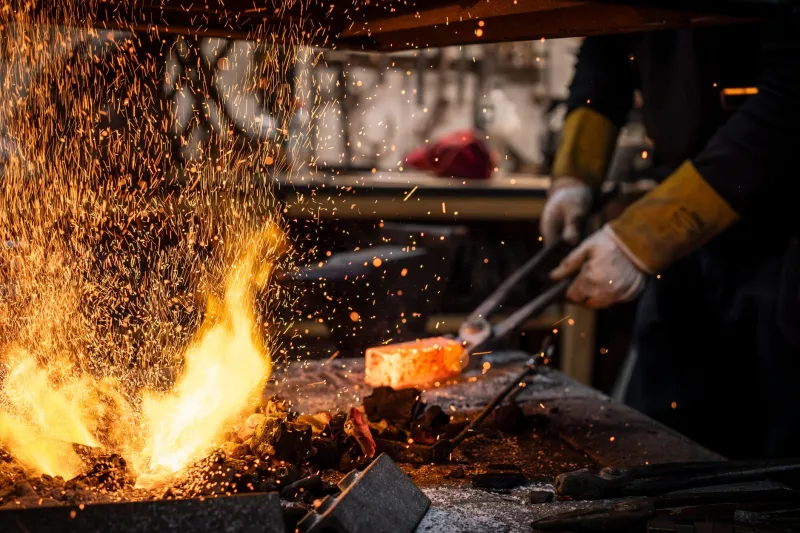
The heart of the quote. At a typical small-shop rate of $90–$110 an hour, this piece represents around 20 hours of labor: cutting, forging the leaves one at a time, tapering scrollwork, fitting, welding, grinding every weld smooth, fitting the mesh, and finishing. Hand-forged leaves alone can eat a full day.
This is the line item that separates custom from catalog. A factory screen is stamped by machines in minutes. Yours is being made by a person, at a bench, over weeks.
Finish and Delivery: About $280
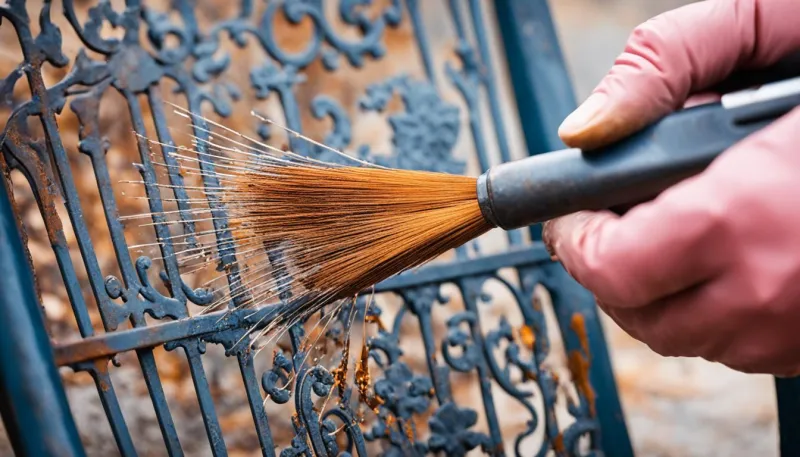
Degreasing, wire-brushing, the black finish, wax topcoat, curing time, plus packing and local delivery. If the shop uses powder coating, add a subcontractor fee of $150–$300 depending on size.
So Why Not Just Buy the $300 Catalog Version?
You absolutely can, and for some rooms you should. But understand what you're comparing. The catalog screen is one design, made by the thousand, from thin stock, designed to be adequate. The custom screen fits your exact opening, matches your room's ironwork, uses heavier stock that won't tip or flex, and can be repaired, refinished, and eventually resold or inherited.
The $300 screen is a purchase. The $2,850 screen is a possession.
A Word About the Cheapest Bid
If you collect three quotes and one comes in dramatically lower, be suspicious rather than delighted. Low bids usually mean one of three things: thinner stock than quoted elsewhere, fewer finishing steps (the invisible ones that determine lifespan), or a shop that's underpricing and will either cut corners or vanish mid-project.
A better question than "what's your price?" is "walk me through what's in this number." Any smith worth hiring can do that in five minutes, and the answer tells you everything about how they work.
Budgeting Without Calling Every Shop in the County
Rules of thumb: simple functional pieces (railings, screens, brackets) tend to land between $85 and $150 per shop hour plus materials. Highly sculptural work runs higher because forging time explodes. Design complexity, not size, is usually the biggest cost driver — a small intricate piece can out-price a large plain one.
Tell the shop your budget range up front. Good smiths can redesign to hit a number: machine-made elements where nobody sees them, hand-forging where the eye goes. That conversation — budget, honesty, design — is worth more than any quote.