Grandpa's Plow Doesn't Belong in a Barn — It Belongs in Your Living Room
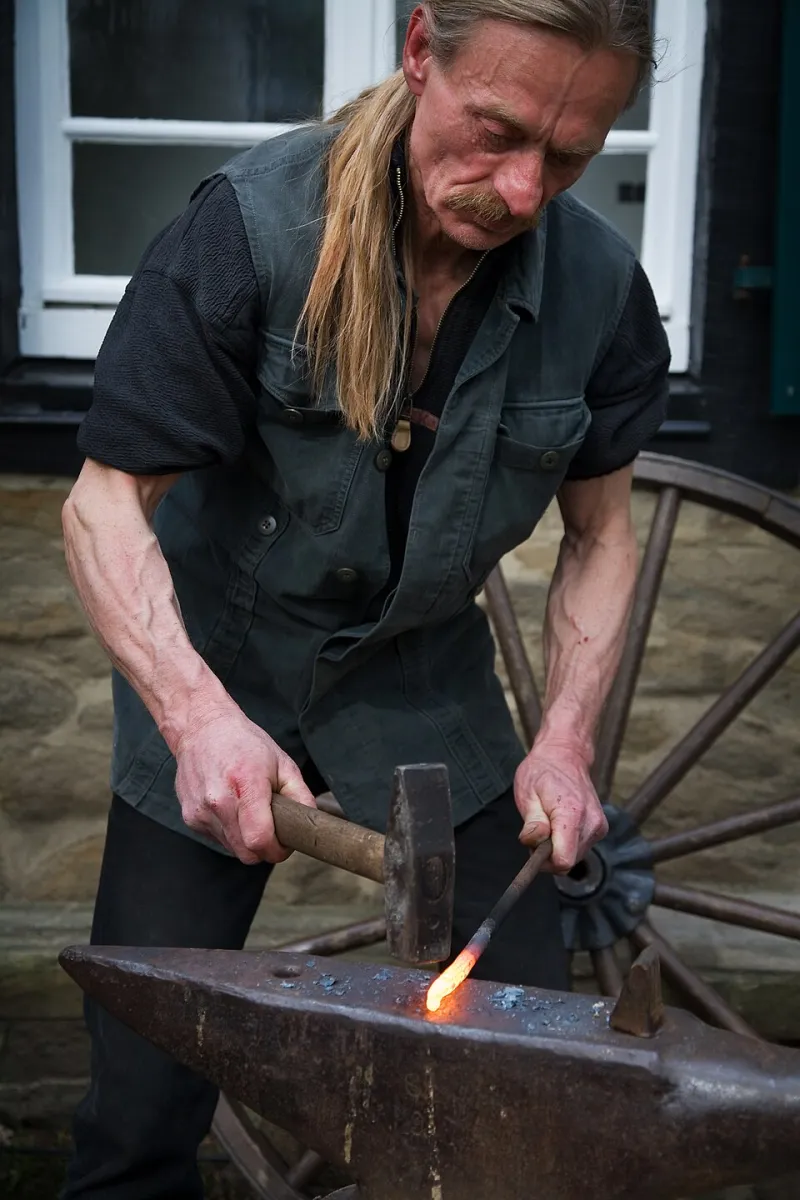
Photo: Jorge Royan, CC BY-SA 3.0, via Wikimedia Commons
There's a rusted plow sitting in a barn outside Ames, Iowa, that hasn't turned soil since the Eisenhower administration. Its owner could sell it for scrap — maybe forty bucks, tops. Instead, she's having it turned into a coffee table with a glass top and a hand-forged base, and when her kids ask where it came from, she'll have an answer that lasts longer than any furniture store receipt.
This is happening all over the country right now. Anvils becoming side tables. Horse-drawn implement parts becoming door pulls. Old forge hoods becoming fireplace surrounds. It's part salvage trend, part family history project, and entirely a pushback against the disposable stuff most of us have been furnishing our homes with.
Why the Tools Keep Calling
Ask anyone who's inherited a farm and they'll tell you the same thing: you can't just throw out Grandpa's tools. Not because they're valuable — most aren't, at least not on paper — but because they were his. You can practically see the decades of grip worn into a handle. The dents in an anvil's face tell you where a hundred years of hammering landed.
Furniture made from these pieces carries that weight, literally and figuratively. A machined coffee table from a warehouse club store has no story. A table built around the plow blade that broke sod on your family's section of Nebraska prairie? That's a conversation piece, an heirloom, and a functional object all at once.
There's also a practical angle that appeals to a lot of homeowners: this metal was made in an era when things were overbuilt. Old farm equipment was forged and cast to survive abuse that would destroy modern mass-produced furniture in a season. The steel is dense, the castings are thick, and the patina — that deep, mottled surface that took a century to develop — can't be faked or rushed.
What Makes a Good Candidate for Conversion
Not every barn relic deserves a second act, and honest metalworkers will tell you so. When we talk with artisans who take on these sentimental commissions, a few criteria come up again and again:
- Structural integrity. The piece needs enough solid metal to carry weight or serve a function. Hairline cracks in cast iron can't always be welded reliably, so a cracked anvil stand might get reworked while the anvil itself stays untouched.
- Iconic shapes. The best conversions preserve the recognizable silhouette. A plow seat becomes a bar stool because you can still tell it was a plow seat. Grind away the character and you've got generic steel.
- Workable connections. The artisan needs ways to join old to new — welding points, bolt holes, brackets — without compromising the original. This is where the craft really shows.
- Emotional clarity. Sometimes the family wants everything kept. Sometimes they want just one element, like the anvil face or a clevis, worked into a larger piece. The best commissions start with a conversation about what part of the story matters most.
Anvils are the classic example. A well-worn anvil is almost a sculpture already, and setting one as the base for a small side table or a pedestal for a hallway console requires restraint more than reinvention. The smith's job is to add just enough — a forged base, a wood or stone top — to make it livable without burying the history.
How the Commission Actually Works
These projects start differently than a typical custom order. Instead of a Pinterest board, clients show up with a photograph of something rusting under a tarp, or they trailer the whole thing to the shop.
A good artisan will start by cleaning and assessing the piece — wire brushing a small test area, checking for cracks, mapping out what's original versus what's been patched over the decades. Then comes the design conversation. Should the rust stay, or should the metal be sealed with a clear coat to freeze the patina where it is? (Usually, it stays — that surface is the biography.) Should new steel be left bright to contrast with the old, or forged and patinated to blend?
Timelines run similar to other custom metalwork — typically four to eight weeks depending on complexity — and pricing varies widely. A simple anvil side table might land in the low hundreds for the fabrication work, while a full dining table built around a hay trolley or a set of cultivator wheels can run well into four figures. What clients are paying for isn't just the hours; it's the judgment of knowing what to leave alone.
The Anti-Disposable Argument, Made in Steel
There's a broader current underneath this trend. Americans have gotten numb to furniture that's designed to be replaced — the bookshelf that sags in two years, the table that chips the first time someone sets a pan down. Turning a piece of family equipment into furniture is the loudest possible rebuttal to that cycle. It says: this object mattered, and it will keep mattering.
It also keeps skills alive. The smiths taking these commissions are practicing joinery, forging, and finishing techniques that nearly vanished a generation ago. Every plow that becomes a table is a small vote for that knowledge surviving.
If there's a piece of old iron in your family's history — a tool, a machine part, a bracket off the original homestead — don't let it rust into nothing. Find a metalworker who'll listen to the story first and pick up the hammer second. The barn doesn't need it anymore. Your living room does.