When the Vines Move In: Why a Forged Trellis Is the Sculpture Your Garden Is Missing
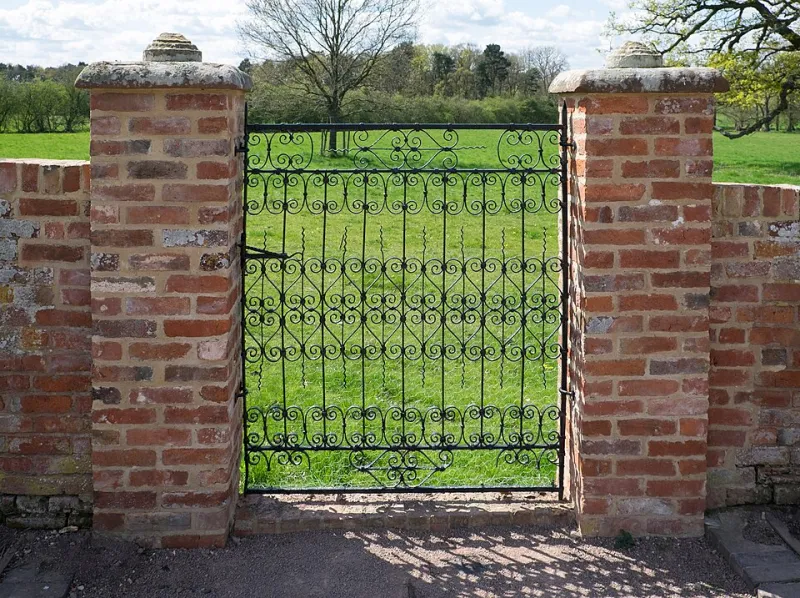
Photo: DeFacto, CC BY-SA 4.0, via Wikimedia Commons
Walk through any suburban nursery in April and you'll find a rack of trellises: powder-coated steel tubes, plastic-coated wire, the occasional resin "wrought iron look" panel. They're cheap, they're everywhere, and by year three most of them are rusting at the soil line or folded into the garage sale pile.
Now walk through a garden designed by someone who takes the vertical seriously — a rose arbor in a Charleston courtyard, an obelisk rising out of a Denver xeriscape, a copper-flanked clematis wall in the Hudson Valley. The difference isn't the plants. It's that somebody treated the metalwork as architecture, not an accessory.
The Trellis Nobody Thinks About
"People will spend four thousand dollars on a Japanese maple and then put a forty-nine dollar trellis next to it," laughs a garden designer we spoke with in Portland, Oregon. "It's the one structural element in the garden that's almost always an afterthought."
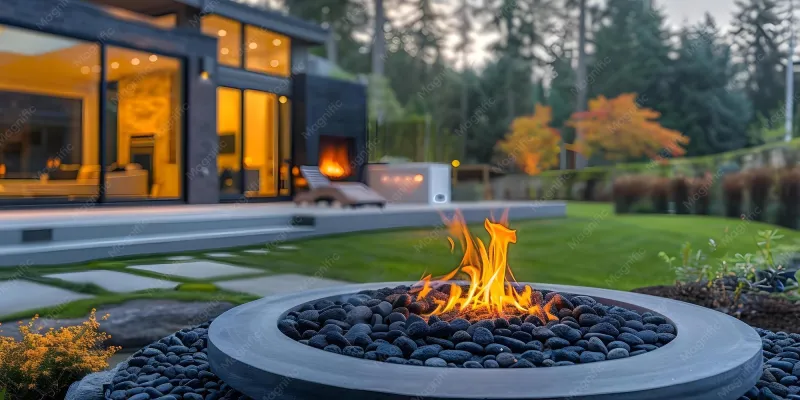
That's starting to change. As more homeowners treat their yards as outdoor rooms — an extension of the same instinct that brought us outdoor kitchens and statement fire features — the vertical layer is getting attention. And metal is the material that makes the vertical layer possible.
A stone wall anchors. A fence defines. But a trellis, arbor, or obelisk draws the eye up. It gives a garden a focal point in winter when everything else is dormant, and it disappears — gracefully — into greenery in July.
Four Seasons of a Single Object
Here's what surprises people who commission their first piece of garden metalwork: the piece never looks the same twice.
In spring, it's bare geometry — clean lines, maybe a hammered finial catching the morning light. By midsummer, a climbing rose or a hardy kiwi vine has claimed it, and the metal becomes a whisper underneath the foliage. In fall, the structure re-emerges with seed pods and late clematis. And in winter, in most of the country, it stands alone — the only thing in the garden with presence.
"A forged trellis is the rare garden object that improves with neglect," one metalworker told us. "Rust becomes a patina choice. Vines soften the lines. Twenty years in, it looks like it grew there."
That's a fundamentally different relationship than most decor has with time. Indoor pieces are protected from weather; garden pieces are shaped by it. Which is exactly why the material and the maker matter so much.
Why Commission Instead of Buy
You can buy a decent trellis. What you can't buy off the rack is a trellis that fits your garden the way a tailored jacket fits your shoulders.
Consider what a commission actually solves:
- Proportion. A six-foot trellis against a twenty-foot wall looks like a mistake. A smith working from your site can scale the piece to the architecture — a twelve-foot arbor for a pergola opening, a slim obelisk sized to a raised bed.
- Plant matching. A heavy wisteria needs steel, not aluminum. A delicate sweet pea wants close wire spacing. A fabricator who gardens (many do) will design for the climber, not just the look.
- Style continuity. If your home has Craftsman details, or your existing railings have a particular scroll, a commissioned piece can speak the same language. The garden stops feeling like a collection of purchases and starts feeling designed.
- Longevity. Hot-dipped galvanizing, proper footing, thoughtful joinery — a well-made piece outlives the plants, the deck, possibly the fence. This is the buy-once philosophy applied to the yard.
What the Process Looks Like
Garden commissions tend to be more relaxed than interior ones, and often more affordable than people expect. A typical flow:
- Site photos and a conversation. Where does the sun hit? What are you planting? What's the style of the house?
- A sketch and a quote. Most smiths will send a hand drawing with dimensions and a price range before any commitment.
- Fabrication. Six to ten weeks is typical, similar to interior commissions — good work can't be rushed.
- Delivery and installation. Many pieces need ground sleeves or footings; a good fabricator plans for this from the start.
Prices vary widely by size and complexity, but a custom obelisk often lands in the same range as a nice pair of outdoor lounge chairs — and unlike the chairs, it will still be anchoring the garden in thirty years.
Start With One Vertical
If your garden feels flat — and most do — you don't need a full redesign. You need one strong vertical. An arbor over a gate. An obelisk in the rose bed. A trellis that screens the neighbor's AC unit and looks good doing it.
The backyard has quietly become the most lived-in room of the American house. It deserves the same treatment: real materials, real craft, and pieces that get better every year you own them. The vines will handle the rest.