Made to Mark the Moment: Why More Americans Are Commissioning Metal for Life's Biggest Days
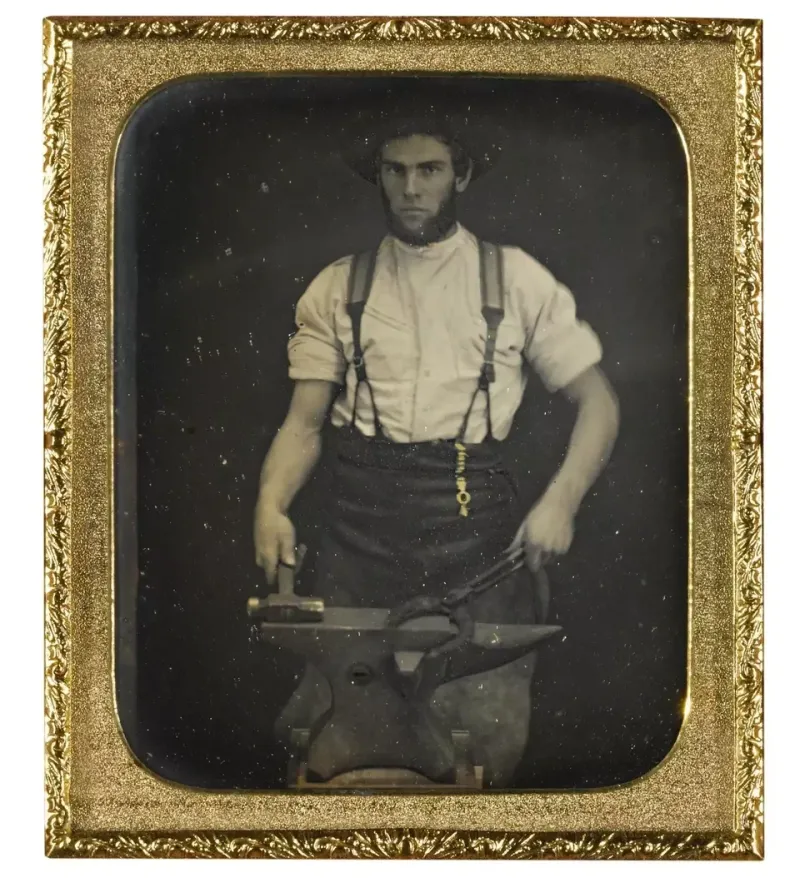
Photo: Summer A. Smith, Public domain, via Wikimedia Commons
There's a shelf in most American homes that tells the truth about wedding gifts. The blender that stopped blending. The third waffle maker. The crystal that only comes out when the in-laws visit. Meanwhile, somewhere across town, a blacksmith is finishing a forged wall piece with a couple's initials hammered into the border — and that piece will still be hanging in a grandchild's house fifty years from now.
Commemorative metalwork is having a moment. We're seeing it in our own commission queue: anniversary gifts, wedding pieces, engraved keepsakes for new babies. And it makes sense. When everything else in a big-box cart is designed to be replaced, an object made by hand, by a person, for one specific family, starts to feel less like a gift and more like an artifact.
Why Milestones Deserve Mass
The whole appeal of a milestone gift is permanence. You're marking a day that matters, so the object should hold up — physically and emotionally. That's where metal has an unfair advantage over nearly everything else on a registry.
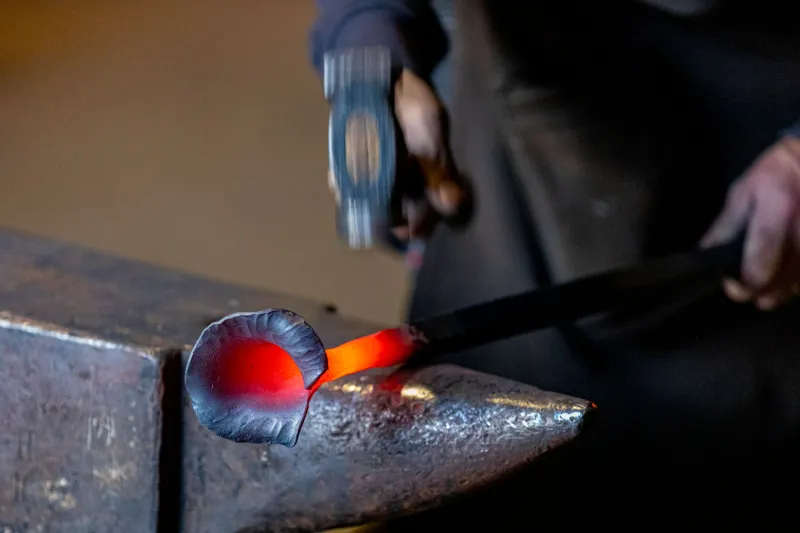
Forged steel and iron don't fade, yellow, or chip the way resin and ceramic do. Brass and copper develop a patina that gets better with age, which is a lovely metaphor if you think about it too long. And because every piece is shaped over an anvil rather than stamped out of a mold, no two commissions are identical. Your gift isn't "item 4,502 in a warehouse." It's the only one that exists.
What People Are Actually Commissioning
Milestone metalwork runs a wider range than you might expect. A few of the pieces we've seen gain traction with American couples and families:
- Wedding and anniversary pieces. Forged wall art with intertwined lines representing the couple, or a traditional sixth-anniversary iron gift with a modern sculptural twist.
- Baby and christening gifts. Small engraved brass plaques, a forged keepsake box, or a wall hook set stamped with the birth date — things a child grows up with and eventually takes to their own home.
- Family name pieces. A forged house sign or entryway marker for a couple buying their first home.
- Memorial work. Perhaps the most meaningful category — a piece incorporating a loved one's dates, or metal from something they owned, worked into a new form.
What Makes a Piece Worth Engraving
Not every object deserves a date hammered into it. The pieces that become heirlooms tend to share a few traits.
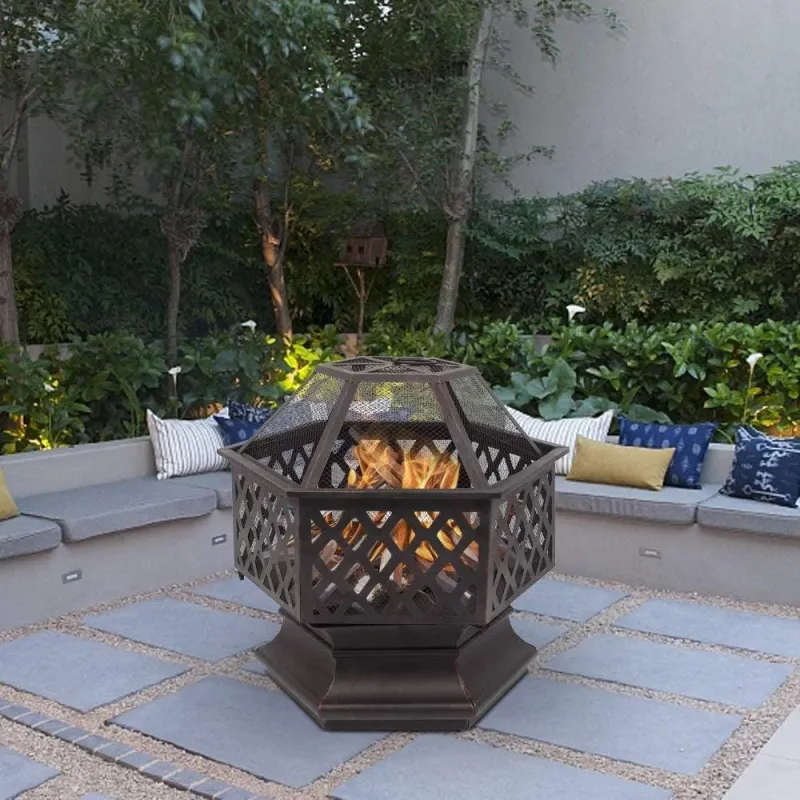
First, they're functional or architectural — a fire screen, a candle stand, a coat rack. Objects that get used get remembered. A dust-collecting tchotchke, no matter how well engraved, tends to end up in a donation bin.
Second, the engraving itself should be part of the design, not slapped on as an afterthought. A good smith will integrate lettering into the composition — hand-stamped, chased, or cut so the words feel like they grew out of the metal.
Third, restraint. The best commemorative pieces whisper. Initials and a date, done well, outlast a paragraph of text by decades.
How a Milestone Commission Actually Works
The process is simpler than most people assume, but timing matters. Here's the honest rundown:
- Start early. A custom piece takes weeks, sometimes months. For a wedding, reach out at least three to four months before the date.
- Share the story. The best commissions start with context — how the couple met, the family farm where they got engaged, the quote from grandma. Smiths aren't just fabricators; they're translating a story into form.
- Approve a sketch. You'll see a drawing before any metal is heated. This is where you adjust scale, finish, and lettering.
- Trust the maker. Once the hammer starts swinging, the smith's hand shapes the final character. That's the point.
Budget-wise, expect custom milestone pieces to start in the low hundreds for small engraved work and climb from there for larger commissions. Which, honestly, is often less than what guests spend on registry items nobody wanted.
The Gift That Shows Up in Family Photos for Generations
Here's the thing about the china pattern: it lives in a cabinet. A forged piece lives in the room. It gets touched, polished or left to patina, moved from one house to the next, and eventually argued over by adult children who both want it.
That's the real trend behind commemorative metalwork. Americans aren't rejecting tradition — they're looking for a version of it that fits how we actually live. Something handmade. Something with a maker's mark. Something heavy enough, in every sense, to carry the weight of the day it marks.
If there's a milestone on your calendar, consider skipping the gift card. Give them something forged instead. The blender will die. The iron won't.