No Room for a Staircase? That's Exactly the Problem the Forged Spiral Solves
The math of small-space living is brutal, and nothing eats square footage faster than a staircase. A conventional straight run in a compact townhome or backyard ADU can devour 80 or more square feet on both floors — prime real estate in a home that might only measure 600.
Which is why, all across the country, builders and homeowners are rediscovering an old answer: the spiral stair. And increasingly, they're choosing the hand-forged version over the big-box kit.
Why Now
Three trends are converging. Accessory dwelling units have been legalized and encouraged in states from California to Oregon to Massachusetts, and ADUs live or die on efficient floor plans. Urban infill and loft conversions keep producing narrow footprints where a spiral is the only stair that fits. And a broader design shift — the appetite for statement pieces with visible craftsmanship — has homeowners asking why the staircase, of all things, should be boring.
A well-made spiral doesn't just solve the footprint problem. It becomes the thing people photograph when they visit.
The Structural Reality
Spiral stairs are engineered objects, not just curled railings. The center column carries the load; treads cantilever off it; the whole assembly anchors to a substantial slab or framing below. In a typical residential application you're looking at a footprint of roughly five to six feet in diameter — compared to the ten-plus feet a conventional stair demands.
The trade-off is climbability. Codes generally require a spiral to have a minimum clear width around the column (often 26 inches), adequate headroom, and tread geometry that lets a person of any age get up and down safely. Carrying a mattress up one is a special kind of afternoon. But for accessing a loft, a rooftop deck, or a second-floor bedroom in a compact build, they work — and code-compliant ones are perfectly legal as the primary stair in most single-dwelling applications, with local variations.
Kit vs. Forged: The Honest Comparison
Prefab steel spiral kits run roughly $4,000 to $12,000 installed for a basic residential unit. They're uniform, quick to ship, and utterly anonymous — the same stair in ten thousand homes.
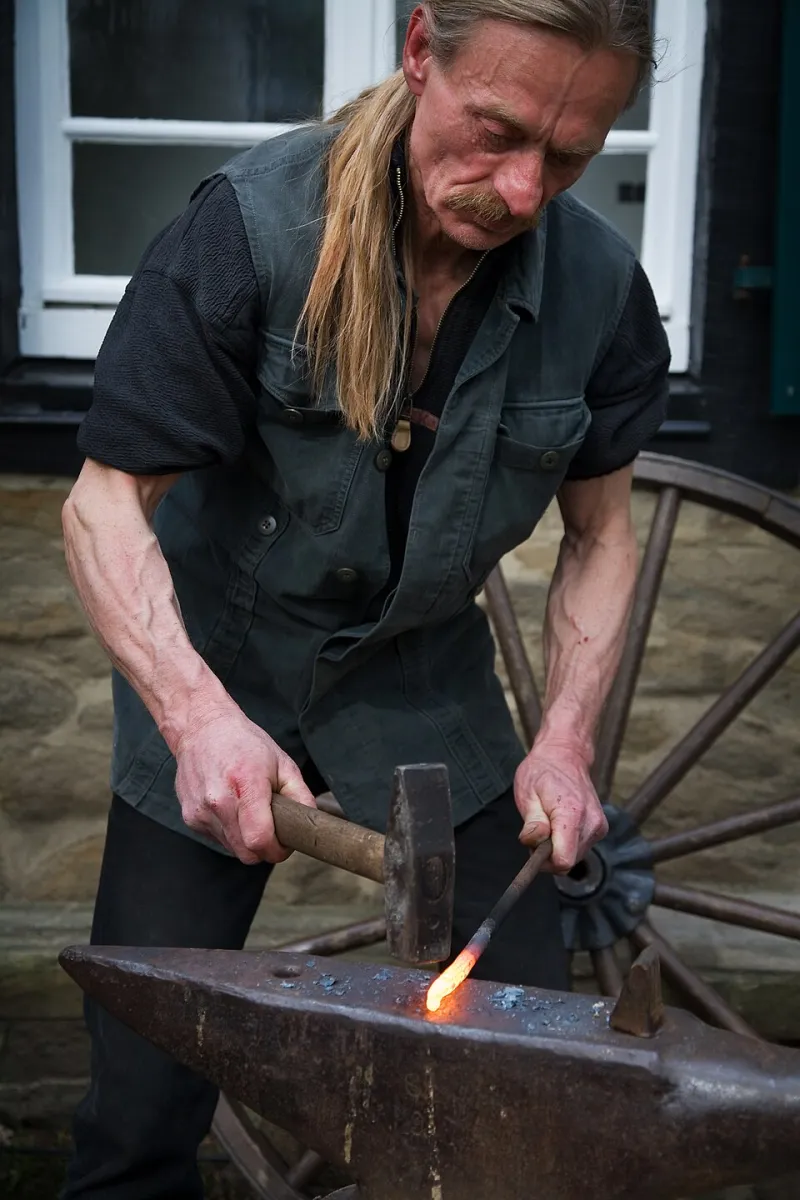
A hand-forged spiral from a small American shop typically starts around $15,000 and climbs from there, depending on diameter, rise, railing complexity, and finish. What that buys you: heavier treads that don't drum underfoot, a railing formed to your design rather than a catalog module, and a structure engineered for your exact opening by the person building it.
The Family Who Chose the Anvil
When the Ramirez family converted their Portland garage into a rental ADU for her aging mother, the plans called for a prefab kit. Then Marisol Ramirez visited a friend's home with a forged stair.
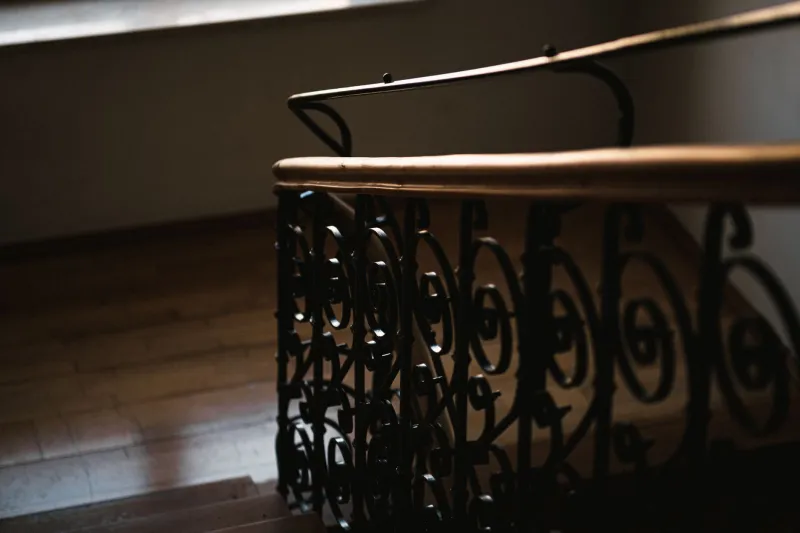
"I stood on it and it just felt different. Solid. Quiet. And the railing was beautiful — it curved like it was drawn, not assembled."
They commissioned one instead, with a subtle leaf motif matching the entry gate, for about $19,000 — roughly double the kit. Was it worth it? "For a rental, honestly, maybe not," she laughs. "But this is where my mother lives, and eventually maybe we will too. It's the first thing you see when you walk in. My mom calls it her sculpture. I stopped doing the math after that."
There's also the longevity argument. A forged stair, properly finished, will outlast the building around it. Kits, with thinner-gauge treads and bolt-together railings, tend to show their age in a decade.
If You're Considering One
Start with the opening, not the design. Measure your floor-to-floor height, confirm your slab or framing can take the column load, and check your local code on spiral requirements before falling in love with anything. Then bring a smith in early — the best forged stairs are designed with the space, not dropped into it.
In a small home, every element has to earn its footprint. A spiral stair that doubles as the home's centerpiece doesn't just earn it. It repays it, every time you walk in the door and look up.